
Governance
Responsibilities of the Executive Board Rectoral Board
The Executive Board is responsible for (Article 56):
I. To lead the process of development, expansion and consolidation of Rectoral Board on a global scale;
II. To coordinate the partnerships in the areas of operation with the purpose of strengthening the group of members of Rectoral Board;
III. To develop continuous innovation in the portfolio of Rectoral Board;
IV. Guarantee the economic and financial sustainability of Rectoral Board;
V. To comply with and enforce the provisions of these Statutes, internal regulations, and the resolutions of the Higher Council meeting;
VI. To formulate the internal regulations and make the respective amendments;
VII. To regulate the statutory and procedural provisions;
VIII. To authorize the expenses necessary for the proper administration of the association, using the association's social accounts for this purpose;
IX. To manage assets and social resources, ensuring their safekeeping, conservation, and, if possible, their enhancement and increase;
X. To sell and acquire real estate and personal property, to enter into mortgage-backed loans, and to enter into any other contracts that may encumber the association;
XI. To hire, reassign, and dismiss personnel in accordance with innovative management criteria;
XII. To issue diplomas, cards, and identification documents for members and social membership cards;
XIII. To create, structure, and establish committees to address specific issues;
XIV. To decide on proposals from new members and determine their registration in the membership register;
XV. To convene meetings of the Superior Council, as provided for in the Statute;
XVI. Submit annually to the Fiscal Council for its analysis the annual balance sheet and related income and expense documents provided by the Treasury; and the inventory of the company's assets;
XVII. To establish the amounts, frequency, and method of receiving social security contributions;
XVIII. To analyze and accept or reject justifications presented by members when they are in arrears with social security contributions owed to the Association;
XIX. To grant exemptions, rebates and discounts on the payment of fees due by members;
XX. To decide on the application of penalties to members and appeals arising from them, in accordance with the statutory provisions;
XXI. In cases of resignation of any member of the Executive Board or the Fiscal Council, the Board may nominate a competent substitute, deciding, by simple majority, to approve one of the nominated names.
Responsibilities of the Executive Secretary General
The Executive Secretary General is responsible for (Article 58):
I. To represent or succeed the President of the Superior Council or the Vice-Presidents of the Superior Council in their absences or impediments, and to succeed them in the event of a vacancy in the position;
II. To convene, install and preside over the meeting of the Superior Council together with the Presidency of the Superior Council;
III. Initial the books of the General Executive Secretariat and Treasury;
IV. To determine or convene and preside over the ordinary and extraordinary meetings of the Executive Board, and to execute and ensure compliance with its decisions;
V. Implement actions to grow the subscriber membership base and to achieve other strategic goals of Rectoral Board;
VI. To motivate the Presidency, the Regional Vice Presidents, the Deputy Regional Vice Presidents, and their respective Regional Executive Secretariats (SER) and Regional Academic Secretariats (SAR) to strengthen the presence of Rectoral Board within their respective areas of operation;
VII. To coordinate the promotion of joint activities of Rectoral Board between the regions of operation;
VIII. Represent Rectoral Board in social events and agendas;
IX. To seek ways to increase the inflow of economic and financial resources for the sustainability of Rectoral Board;
X. To comply with and enforce the penalties imposed on signatory members, in accordance with the provisions of these Bylaws;
XI. Represent the Rectoral Board actively and passively, judicially or extrajudicially, and may appoint attorneys for this purpose;
XII. To sign, jointly with one of the Treasurers, checks, bonds and securities issued by the Association;
XIII. To create structures in order to assist the development of activities that promote growth. Rectoral Board;
XIV. To draft, read, and file the minutes of the Executive Board meetings and prepare the papers and documents to be submitted to the Superior Council;
XV. To inform the Executive Board of all correspondence received or sent;
XVI. To propose to the Executive Board the adoption of measures deemed appropriate for the improvement of services.
Responsibilities of Regional Structures
The regional structures of Rectoral Board They will be structured as follows (Art. 67):
Vice President – VP
Deputy Vice President – VPA
Regional Executive Secretariat – SER
Regional Academic Secretariat – SAR
Secretariat for Interinstitutional Relations – SRI
Responsibilities of Vice Presidents (VPs) in regions with a presence of Rectoral Board (Art. 70º):
I. To promote the activities of Rectoral Board in their regions, with the purpose of strengthening their institutional presence, relevance, and prestige.
II. To link up with the region's education sector (Education Institutions, Education Networks and Governments), with the aim of strengthening the membership base of associated signatories of Rectoral Board.
III. To represent, offer, and manage the portfolio of services of Rectoral Board in the region where it is located.
IV. Explore opportunities to represent, offer, and manage the service portfolio of Rectoral Board in the region where it is located. of fundraising projects with strategic institutional alliances
V. Present the regional activity plan in line with the institutional activity plan of Rectoral Board, in an ordinary general meeting.
It is the responsibility of the Assistant Vice-Presidents – AVPs to act jointly with the Regional Vice-Presidents or on their behalf, and they may or may not be from the same institution (Article 70).
Responsibilities of the Regional Executive Secretariat – SER (Art. 72º):
I. To lead the process of development, expansion and consolidation of Rectoral Board within the area of operation.
II. To coordinate inter-institutional collaborations with regional leaders in order to strengthen the commitment of signatory members of Rectoral Board.
III. Develop continuous innovation in the portfolio of activities of Rectoral Board.
IV. To legally support the activities of Rectoral Board in all areas of activity.
Responsibilities of the Regional Academic Secretariat – SAR (Art. 73º):
I. To propose, review, and evaluate pedagogical projects for academic programs and initiatives in general to be offered by Rectoral Boardwithin the area of operation;
II. To ensure the academic records, certifications, and academic evaluation of academic programs and initiatives in general to be offered by Rectoral Boardwithin the area of operation;
III. To carry out quality assessment activities for academic programs and initiatives in general offered by Rectoral Board, within the area of operation.
Responsibilities of the Secretariat for Interinstitutional Relations – SRI (Art. 74º):
I. To promote spaces for strengthening inter-institutional relationships of Rectoral Board and its signatory members associated with various interest groups within the region of operation;
II. Identify opportunities for inter-institutional cooperation of Rectoral Board that will enable the expansion of presence, prestige and connections within the region of operation;
III. Coordinate actions to increase the visibility of the activity plan of Rectoral Boardwithin the area of operation;
IV. To support signatory associate members in their internationalization initiatives based on the network of contacts of Rectoral Board and from their personal relationship base.
Responsibilities of the Higher Council
The Superior Council is responsible for (Article 44):
I. To contribute suggestions to the strategic decision-making process;
II. To propose ideas for modifying, reforming, or altering the Association's Bylaws;
III. To review, discuss, analyze, evaluate, or recommend the challenge or annulment of any actions taken by the bodies that comprise the Association;
IV. To address matters of interest to the Association and its signatory members, when proposed by the Executive Board and the Fiscal Council.
V. To contribute suggestions for actions to strengthen the presence of Rectoral Board in the regions where it is located.
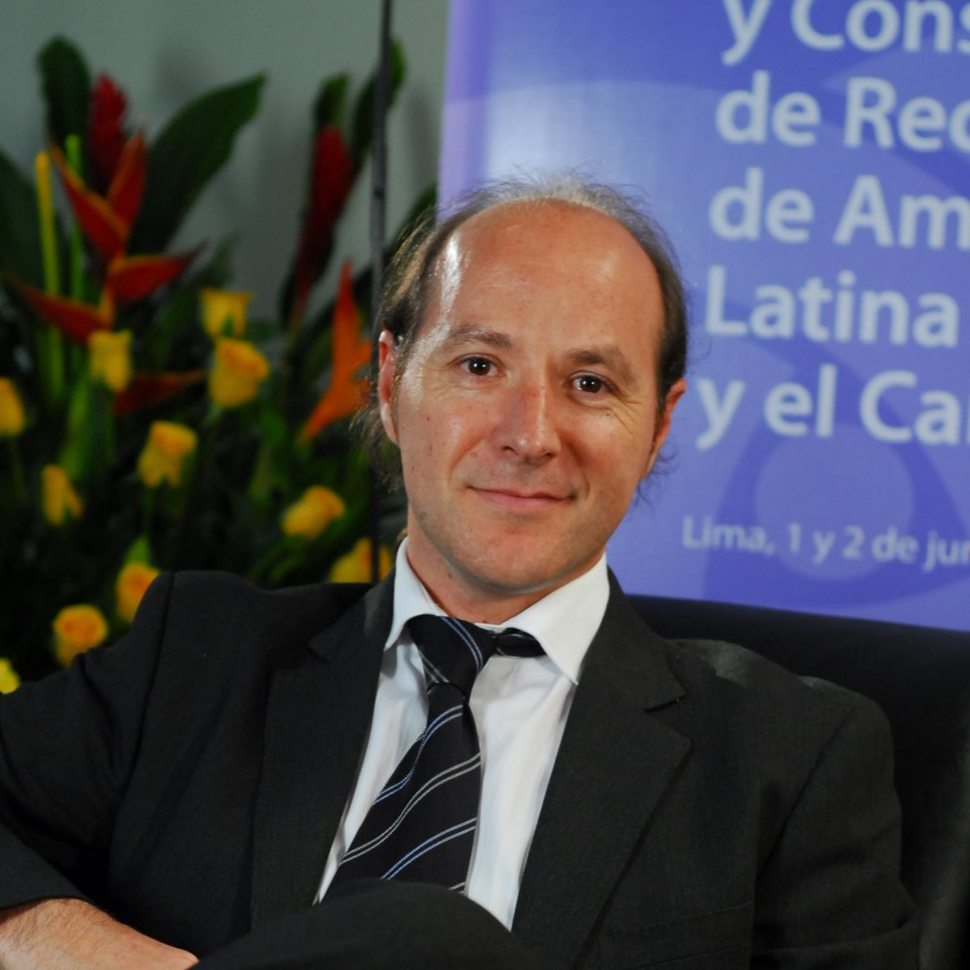
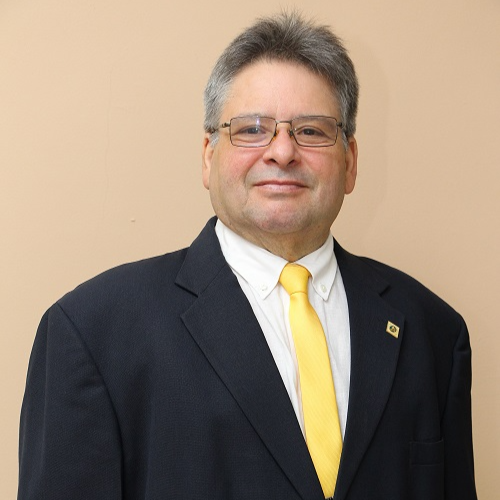
Superior Council
-
 Víctor Abel Huanambal Tiravanti
Director of the Innovation and Entrepreneurship Center
-
Uriel Ruben Cukierman
Director CIIE
-
Sylvia Paz Díaz Camacho
Rector
-
Simeon Hugo Ferreira González
Rector, Intercontinental Technological University (UTIC)
-
Sebastian Salesius Herdt
President of the Unisul Foundation
-
Santiago Acosta Aide
Rector UTPL
-
Rosario Elizabeth Velasco Valeriano
Regional Rectorate, Potosí headquarters
-
Raúl Adolfo Salinas Morel
Vice-Rector of UTIC Linkage - Paraguay
-
Raúl Arias Lovillo
former Rector of the Veracruzana University and former President of the OUI
-
Ramón F. Ferreiro Gravié
Researcher
-
Ramona Rodríguez Pérez
UNAM Rector
-
Ramfis Miguelena
Teacher invests
-
Rafael Antonio Escalona Zerpa
Academic Vice President
-
Pedro Melo
Executive Director INPEAU UFSC
-
Paulo Ivo Koehntopp
Executive Secretary of the ACAFE System
-
Obdulio Velasquez Posada
EX RECTOR
-
Miguel Ángel Salas Gonzales
Rector
-
Miguel Ramón Fiallo Calderón
Rector
-
Miguel J. Escala Figueredo
Professor Emeritus INTEC/ Independent Consultant and Executive Director of IGLU/OUI
-
María Del Carmen Parrino
UNTREF Postgraduate Coordination
-
María Anna Amerio
President of FUNINDES USB
-
Maria Esther Souto Galvan
Professor of Law at UNED
-
Luciano Rodrigues Marcelino
Executive General Secretary of Rectoral Board
-
Katalina Perera Hernández
Academic Division Division, OPES-CONARE
-
Judith Virginia Mendoza de Díaz
Rector UMA
-
Juan Manuel García Samaniego
President (minister)
-
José Manuel Cabrera Sixto
Former Director General
-
José Carlos Quadrado
Pro-President
-
José Armando Tavarez Rodríguez
Director General
-
Jose Miguel Carot Sierra
Director of Quality and Accreditation
-
Humberto Alvarez
Teacher
-
Hugo Juri
Rector UNC
-
Hernán Mauricio Chaves Ardila
Rector
-
Gildo Volpato
Research professor at the University Studies Group (GEU/UNESC)
-
Fernando J. Quesada Ramírez
Advisor
-
Evilazio Francisco Borges Teixeira
Rector of PUCRS
-
Edwin Roger Esteban Rivera
President of the Postgraduate Research Network in Education
-
Claudio Alcides Jacoski
Rector of UnoChapecó and President of ABRUC
-
Brenda Hopkins Miranda
Assistant Professor
-
Angel Rodríguez González
Rector
-
Ana Stefanía Bravo Muñoz
General Executive Secretary of REIES and Coordinator of Global Campus UTPL
-
Ana Melba Villanueva Matos
Dean of Students
-
Alvaro Rios
exRector




























Strategic identity
Institutional Mission
- To promote a common space for creative, disruptive, and forward-looking thinking, bringing together voices, talents, and skills necessary for the integrated development of education in a global context.
Rectorial Vision 2050
- By 2025, to be the largest network of decision-makers in higher education in Latin America and the Caribbean;
- By 2030, to be the largest network of decision-makers in higher education across the Americas;
- By 2035, to be the largest network of decision-makers in higher education in the Ibero-American region;
- By 2050, to be the largest network of education decision-makers in general, across Latin America and the Caribbean.
Be Rectoral Board
- Commitment to the cause of transformative education that changes life stories.
- Strategic, sustainable, inclusive, and excellence-driven development of education.
- Recognition, recovery, appreciation, and development of educational leaders.
- Building public education policies as a common social good.
- Social democratization of knowledge.
Guiding Principles
We pray that:
- May we be able to work together in a rich process of collective construction;
- The past is less decisive than the present and what we will do in the future;
- May we understand quality as a philosophy of prevention and as a way of being in everyday life;
- Let us have love for the truth and for upholding transcendent values through the humanization of civilization;
- Let's develop an inclusive mindset to support everything that unites us and reject everything that divides us;
- Let us be worthy of the trust of our stakeholder groups;
- Let's learn from everyone, drawing on their diverse knowledge;
- Knowledge should be democratized;
- 'No one left behind'; (NNUU);
- 'All of you should live in harmony and without divisions, but with one mind and one purpose.' (1 Corinthians 1:10)
Industry Sector
Educational Institutions
Value offer
To contribute to institutional strategic development so that they can establish innovative positions.
Education Brands
Value offer
To articulate convergences of wills, bring together skills and channel strategic resources to promote the foundations for the integration of national and cross-border education systems.
Public Educational Policies
Value offer
To influence the development of other perspectives on the democratization of knowledge, with autonomy in its multiple dimensions, towards a more inclusive and sustainable model of quality education for all.
Target Audience
Gold Category
Our Purpose
To contribute to the training of a new generation of educational managers, from a systemic, human and global perspective of education.
Platinum Category
Our Purpose
To enhance capabilities, skills, awareness, and commitment to integration, excellence, and social transformation.
Diamond Category
Our Purpose
To keep the knowledge and experience active through the practice of quality education and the applied experience gained in the career path achieved.
Institutional Policies
Privacy policies
We are committed to maintaining the confidentiality of all our members' information and applying best practices for information security protection and management based on the international guidelines of the ISO 27001 standard.
Quality, environment and policy
social responsability
Our commitment as an international network advocates for the ongoing training of leaders and managers who make strategic decisions, prioritizing effectiveness in organizational processes, promoting quality education, systematizing social responsibility, and caring for the environment, but with humanism, humility, empathy, respect, and commitment to the sustainable development of the planet.
Insight
Identifying the need to build a common educational space that recovers, integrates, and keeps active knowledge based on the significant experiences of key actors in academia, for the sake of sustainable development, social progress, and the humanization of civilization.
Prof. Dr. Luciano Rodrigues Marcelino – Founder of Rectoral Board
Latin America and the Caribbean have just over 11 Higher Education Institutions (HEIs), of which 4000 are considered universities. Therefore, there is a large number of founding former rectors of HEIs, with extensive professional experience, available to carry out key activities in the field of public policy development or to advise other leaders of HEIs, networks, or governments with successful administrative and/or academic practices.
In the vast majority of higher education institutions, after completing their term as rector, rectors end up leaving the institution, usually due to political positions contrary to their successor or to give the incoming rector more freedom to conduct their administration; an exception is made for rectors with contractual ties through public competitions who have the right to remain in the position of research professor.
On the other hand, there is a high number of cases of Rectors suffering from depression and other post-term pathologies, associated with the loss of power after years of enjoying all the political and social benefits of holding the rectorial position.
Inspired by this scenario, we decided to develop a common open innovation space to bring together educational leaders, Rectors, Presidents of higher education networks, and Ministers/Secretaries of Education, currently in office or recently graduated, to create an exclusive base of professionals with the highest academic-administrative technical qualifications and personal reputation in the complex universe of higher education management, aimed at offering a set of high value-added services to HEIs, educational networks, and governments globally.